
Where to Stay Near Hiking Trails in Malaysia
- July 5, 2026
- Uncategorized
Find out how to stay near hiking trails in Malaysia with the right location, transport, amenities and stay type for a smoother... Read More
 by User Deleted

Landing in Kuala Lumpur after a long flight, the first transport decision usually happens before the luggage trolley stops rattling. Do you book an airport transfer, call an e-hailing car, or head straight for the train? The best transport options for tourists are not the same for every trip in Malaysia, because your route, budget, group size and travel style all change what makes sense.
Malaysia is one of the easier countries in the region to move around, but easy does not always mean obvious. A couple staying in the city centre will make different choices from a family with pushchairs, a group heading to the islands, or a remote worker planning a month between Penang and Kuala Lumpur. If you want smoother travel, it helps to match each journey with the right kind of transport rather than picking one option for the whole holiday.
For short city journeys, e-hailing and rail usually do the heavy lifting. In Kuala Lumpur, the LRT, MRT, Monorail and KLIA rail links are practical for avoiding traffic, especially during weekday rush hours. If you are staying near a station and travelling light, rail is often the quickest option. It is also more predictable on timing, which matters if you have museum tickets, event bookings or onward coach departures.
That said, stations are not always close to every hotel, homestay or serviced flat. If you are carrying several bags, travelling with young children or arriving late at night, an e-hailing car is often the better fit. It costs more than rail, but the convenience can be worth it after a flight or on a rainy evening.
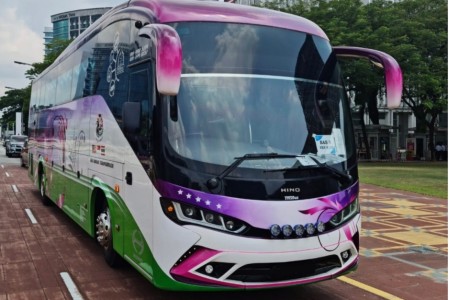
For intercity travel, trains and coaches are usually the first two options to compare. Trains are more comfortable for many travellers and generally easier if you want a calmer journey with less stop-start motion. Coaches can reach more places directly and may be cheaper, but comfort varies by operator and route. If your destination is outside the main rail network, a coach can save you a transfer.
For islands and coastal routes, ferries are part of the plan rather than a backup choice. Places like Langkawi and some east coast island destinations may involve ferry timings that shape your whole itinerary. In those cases, your ground transport should be built around the ferry schedule, not the other way round.
Public transport is one of the best transport options for tourists who want value and do not mind a little planning. In Kuala Lumpur, it is good enough for most visitors staying in central neighbourhoods. You can reach shopping areas, major attractions, business districts and several transport hubs without needing a private car.
The biggest advantage is cost. If you are travelling as a solo visitor or couple, rail fares are usually far lower than repeated car rides. The second advantage is consistency. Traffic in major cities can stretch a simple journey far longer than expected, while rail times stay broadly dependable.
The trade-off is flexibility. Public transport works best when your accommodation is well connected and your plans sit close to stations. It becomes less appealing if your stay is in a quieter residential area, if you are travelling with elderly relatives, or if your day includes several stops spread across the city. In those situations, the time saved on fares can be lost in walking, waiting and changing lines.
Outside the largest cities, public transport becomes more uneven. Some destinations are manageable by coach or local bus, but the experience is less intuitive for first-time visitors. If you prefer simple, low-friction travel, use public transport where the network is strong and switch methods when it is not.
For many visitors, e-hailing is the easiest transport option in Malaysia. It works particularly well for airport arrivals, family travel, dinner outings, and journeys between places that are not neatly linked by train. You get door-to-door convenience, clear pick-up points in most urban areas, and fare visibility before the trip starts.
This is especially useful if you are managing prayer times, travelling with children, or carrying shopping and luggage. A direct ride can reduce stress in ways that a cheaper train ticket cannot. For Muslim travellers and families, comfort and ease are not extras. They affect the whole feel of the day.
Traditional taxis still exist, but many tourists now prefer e-hailing because the booking process is simpler and pricing is clearer. Even so, availability can tighten during storms, public holidays and peak evening hours. In those moments, waiting times increase and fares may rise. If you have a fixed schedule, build in extra time rather than assuming a car will appear immediately.
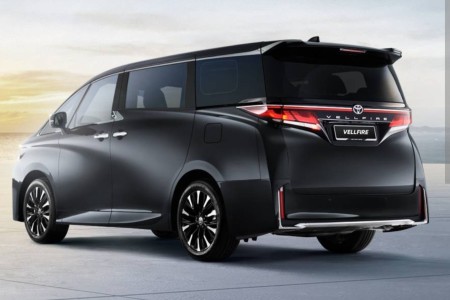
Hiring a car can be one of the best transport options for tourists, but only on the right itinerary. If your plan includes road trips, nature stays, beach towns outside major hubs or multiple stops over several days, a hire car gives you freedom that public transport cannot match. It is particularly useful for families, groups and travellers carrying more gear than average.
A self-drive trip also opens up smaller places that are easy to miss when you rely only on rail and coach routes. You can stop for food, explore at your own pace and reach accommodation that sits well outside station areas. For longer stays, especially if you are combining work and leisure, that flexibility can make Malaysia feel much more liveable.
But city driving is not for everyone. Kuala Lumpur traffic can be tiring, parking fees add up, and unfamiliar road layouts can make short urban trips more effort than they are worth. If most of your time is in the city centre, hiring a car may create more hassle than convenience.
A practical middle ground is to skip car hire for the city portion and only book it for the next leg of the trip. That way, you keep your urban days simple and still get the freedom of the road where it matters more.
If you are travelling between major towns or states, compare coaches and long-distance rail based on comfort, schedule and arrival point rather than price alone. Coaches often win on coverage. They can connect cities, smaller towns and border routes with fewer changes, which is useful if your accommodation is not near a rail station.
Trains usually feel more spacious and less tiring on longer journeys. They suit travellers who value a steadier ride, want room to move about, or simply prefer a less cramped experience. If your route is served well by rail, it is often the more relaxed option.
The detail that many tourists overlook is what happens at the other end. Saving a few pounds on the main journey matters less if you then need an expensive transfer from a remote terminal. Always look at the full route from your accommodation to your next check-in, not just the headline ticket.
Some Malaysian trips depend on sea or air links. Langkawi, for example, is easy by flight, while certain island plans may involve ferries with weather-dependent timing. Domestic flights are helpful when distance matters more than scenery, especially if you have limited holiday days or are pairing two regions far apart.
Flights are fastest in the air but not always fastest door to door. Airport transfers, check-in times and baggage waits can eat into the time saved. For a shorter route, rail or coach may still be the more efficient choice overall.
Ferries are part of the holiday experience for many travellers, but they need more planning. Choppy conditions, seasonal demand and tighter departure windows mean you should avoid scheduling a late connection on the same day if you can help it. A little buffer makes the journey feel far more relaxed.
The smartest way to decide is to start with your accommodation and daily plans. If you are staying in a central Kuala Lumpur flat near rail, use the train for most urban journeys and keep e-hailing for nights, luggage and awkward routes. If you are booked into a beach stay or hillside retreat, a car or arranged transfer may be more realistic from the start.
Think about who is travelling with you. Solo travellers can move cheaply and quickly on public transport. Families often benefit from direct rides, even at a higher cost. Groups may find private transfers or car hire better value once the fare is split.
It also helps to think beyond price. The cheapest option is not always the best one if it adds stress, walking time or missed connections. For many trips, the right choice is a mix: rail in the city, e-hailing for convenience, and a coach, ferry or hired car for the next destination. That is often how travellers get the best balance of cost, comfort and flexibility.
If you are booking your stay and transport together, platforms like MyRehat can make trip planning easier because you can compare travel needs alongside where you will sleep, work or unwind. That matters when convenience is part of the holiday, not an afterthought.
Good travel in Malaysia rarely depends on finding one perfect way to get around. It comes from choosing the option that fits the day in front of you.

Find out how to stay near hiking trails in Malaysia with the right location, transport, amenities and stay type for a smoother... Read More
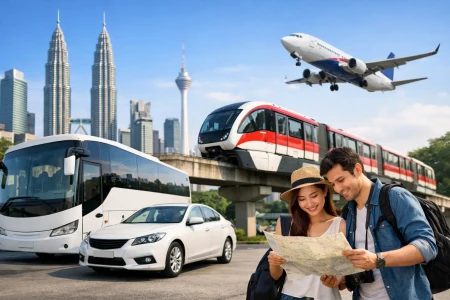
Plan smarter transport for tourists in Malaysia with practical tips on trains, buses, e-hailing, ferries and airport transfers for every trip. Read More

Find the best Malaysia stays for families, from city flats to beach villas, with tips on space, safety, amenities and easy trip... Read More

Find the best transport options for... Read More

Find out how to stay near... Read More
Plan smarter transport for tourists in... Read More

Find the best Malaysia stays for... Read More

Can tourists rent apartments Malaysia? Yes... Read More