
Cara Tempah Penginapan Keluarga Besar
- June 19, 2026
- Uncategorized
Pelajari cara tempah penginapan keluarga besar di Malaysia dengan mudah - semak kapasiti, bilik, lokasi, kemudahan dan bajet sebelum buat tempahan. Read More
 by User Deleted
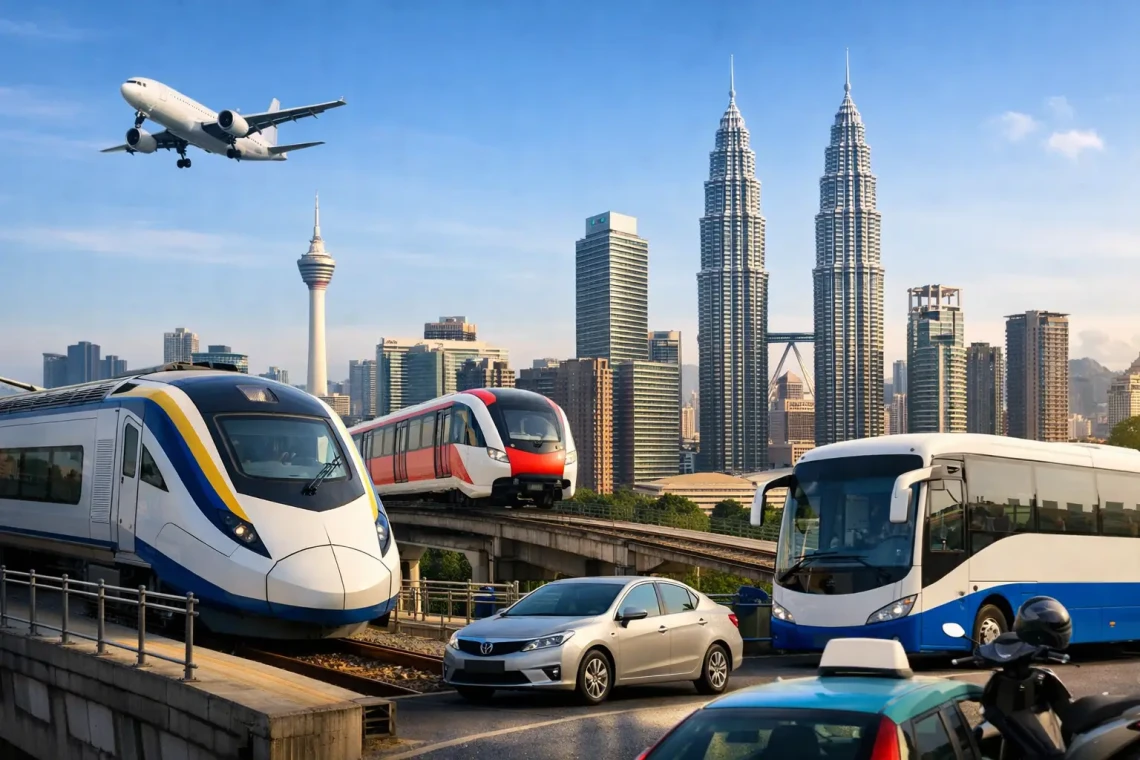
Touch down in Kuala Lumpur, land in Kota Kinabalu, or arrive by land from Singapore or Thailand, and the same question appears fast: what is the smartest way to get around from here? This guide to Malaysia travel transport is built for travellers who want fewer surprises, better timing, and easier booking decisions across cities, islands, highlands, and small-town stops.
Malaysia is generally easy to move around, but not every route works the same way. A fast train is ideal on one stretch, while a coach, ferry, domestic flight, or e-hailing car makes more sense on another. If you are planning a short city break, a family road trip, a beach stay, or a longer work-and-travel stay, choosing the right transport mix can save both money and energy.
The biggest mistake travellers make is choosing transport by habit rather than by geography. Malaysia looks compact on a map, but travel times vary a lot depending on whether you are staying on Peninsular Malaysia or heading to East Malaysia in Sabah and Sarawak.
If your trip is focused on Kuala Lumpur, Melaka, Penang, Ipoh, Johor Bahru, or the Cameron Highlands, you will mostly compare trains, coaches, private transfers, self-drive, and short domestic flights. If your plan includes Kuching, Kota Kinabalu, Sandakan, or island destinations in Borneo, flights become much more relevant because overland connections are not practical for most visitors.
Before you book anything, map your journey in order rather than searching one leg at a time. A route such as Kuala Lumpur to Penang to Langkawi needs different planning from Kuala Lumpur to Ipoh to Cameron Highlands. One is well suited to rail plus ferry or flight, while the other may work better with train first and then road transfer.
Domestic flights are often the best choice when distance matters more than scenery. They are especially useful between Peninsular Malaysia and East Malaysia, and for travellers trying to cover more than one region in a short stay.
Flying also makes sense for island holidays where time is limited. If you are balancing work calls, family plans, or fixed check-in times, losing half a day on a complicated land route is rarely worth it. The trade-off is that airports sit outside many town centres, so you need to factor in transfer time, baggage rules, and possible delays during busy holiday periods.
For longer stays, flights can still be good value if they reduce overnight stops and extra taxi costs. Budget fares can look cheap, but add-ons for luggage and seat selection may change the comparison.
Train travel in Malaysia is one of the easiest choices for selected routes in Peninsular Malaysia. It is comfortable, generally reliable, and less tiring than switching between several bus terminals.
Rail works particularly well for travellers moving between major hubs where station access is straightforward. If you are carrying moderate luggage, travelling as a couple, or simply want a calmer journey, the train often feels more predictable than road travel. It is also a good fit for digital nomads and longer-stay guests who value comfort and legroom over shaving off every minute.
The limitation is coverage. Trains do not take you everywhere you might want to go, particularly hill areas, coastal retreats, and some smaller leisure destinations. In those cases, rail is often the first leg, not the full solution.
In Kuala Lumpur and a few other major cities, urban rail is useful, especially for daytime movement between business districts, shopping areas, and key attractions. It is usually the cheapest way to avoid traffic, and it suits solo travellers well.
That said, city transport in Malaysia often depends on what you are carrying and who you are travelling with. Families with children, groups, and travellers with multiple bags may find e-hailing far more practical. A cheap train ride becomes less attractive if it involves several station changes in humid weather with suitcases.
E-hailing is widely used and often the most convenient choice for point-to-point city travel. It works well for airport transfers, evening plans, and neighbourhoods where public transport access is weaker. The price is usually reasonable, though peak periods and rain can push fares higher.
Taxis still exist, but many visitors prefer app-based booking because it gives clearer fares and pickup details. If convenience matters more than absolute budget, private transfers are even easier, especially for early departures or intercity travel with children or elderly relatives.
It depends on the shape of your day. If you are exploring a single city centre with light bags and flexible timing, public transport is a practical choice. If your day includes check-out, airport transfer, and then a direct ride to a beach stay or highland homestay, private transport is often worth the extra spend.
This is where planning transport alongside accommodation helps. A property in the city centre may reduce daily movement costs, while a more secluded villa or hillside stay may need pre-arranged transport. The cheaper room is not always the cheaper trip once travel time is added.
Coaches remain one of the most common ways to travel between Malaysian towns and cities. They can be cost-effective, frequent, and surprisingly comfortable on established routes. For budget-conscious travellers, they are often the most practical middle ground between rail and flying.
Still, coaches are best when your timing is flexible. Traffic can affect arrival times, and some terminals are less convenient than railway stations or airports. If you have a same-day ferry connection or fixed event booking, leave room for delays.
Self-drive gives the most freedom, especially for family holidays, rural escapes, and multi-stop itineraries. It is particularly helpful in places where attractions are spread out and local transport is limited. A car also suits travellers who want to shop, stop at food spots, or move at their own pace.
The trade-off is obvious: driving in unfamiliar traffic, parking in busy areas, and navigating city congestion. For central Kuala Lumpur, self-drive is often more stress than benefit. For Langkawi, coastal routes, or countryside itineraries, it can be an excellent fit.
Some of Malaysia’s most rewarding stays involve a ferry connection. Islands can offer a very different pace of travel, but they also require more careful timing than city breaks.
Weather, sea conditions, and seasonal schedules can affect ferry services, so avoid building a tight same-day chain of flight, coach, and boat unless you have no alternative. It is often smarter to arrive near the departure point the night before, especially if you are travelling with children, older relatives, or lots of luggage.
For beach trips, the best transport choice is often the one that reduces handovers. A slightly pricier direct transfer can be better than multiple cheaper segments that leave you managing bags at every step.
If you are travelling as a family, simplicity usually beats the lowest fare. Direct transfers, flights on longer routes, and accommodation near transport hubs can make the trip feel much lighter.
If you are travelling on a tighter budget, combine rail or coach for major legs with e-hailing for short urban stretches. This tends to keep costs down without making the journey feel hard work.
For Muslim travellers, practical transport planning matters beyond convenience. A shorter, clearer journey can make prayer timing, family rest, and meal planning easier to manage. Booking stays and transfers with those needs in mind often creates a smoother overall trip.
For digital nomads and longer-stay guests, reliability matters more than novelty. Airport access, walkable neighbourhoods, and easy day-to-day city movement can have more impact on your stay than a one-off scenic route. This is where platforms such as MyRehat can be useful, because transport and stay decisions are easier when viewed as part of one trip rather than separate bookings.
Book your long-distance legs first, especially flights, key rail routes, and ferry sectors during weekends, school holidays, and festive periods. Once those are fixed, build local transfers around them.
Check where you actually need to arrive, not just the name of the town or island. One station, terminal, or jetty can be much more convenient than another depending on your accommodation.
Leave buffer time when changing transport types. A delayed coach affects a ferry more than it affects a flexible hotel check-in. Likewise, an early morning flight may justify staying closer to the airport the night before.
Keep luggage realistic for your route. If your trip includes train platforms, ferry boarding, and e-hailing pickups, one manageable case is far easier than several smaller bags.
Malaysia rewards travellers who plan transport with the same care they give to accommodation. Get that part right, and the country opens up in a way that feels comfortable, flexible, and genuinely easy to enjoy.

Pelajari cara tempah penginapan keluarga besar di Malaysia dengan mudah - semak kapasiti, bilik, lokasi, kemudahan dan bajet sebelum buat tempahan. Read More

Workcation accommodation trends Malaysia show how travellers now choose longer stays, fast Wi-Fi, flexible booking and locally relevant amenities. Read More

Plan hiking trips Malaysia with ease. Find routes by fitness, weather, transport, stays and Muslim-friendly options for a smoother trip. Read More

A guide to Malaysia travel transport... Read More

Pelajari cara tempah penginapan keluarga besar... Read More

Workcation accommodation trends Malaysia show how... Read More

Plan hiking trips Malaysia with ease.... Read More

A practical guide to flexible payment... Read More